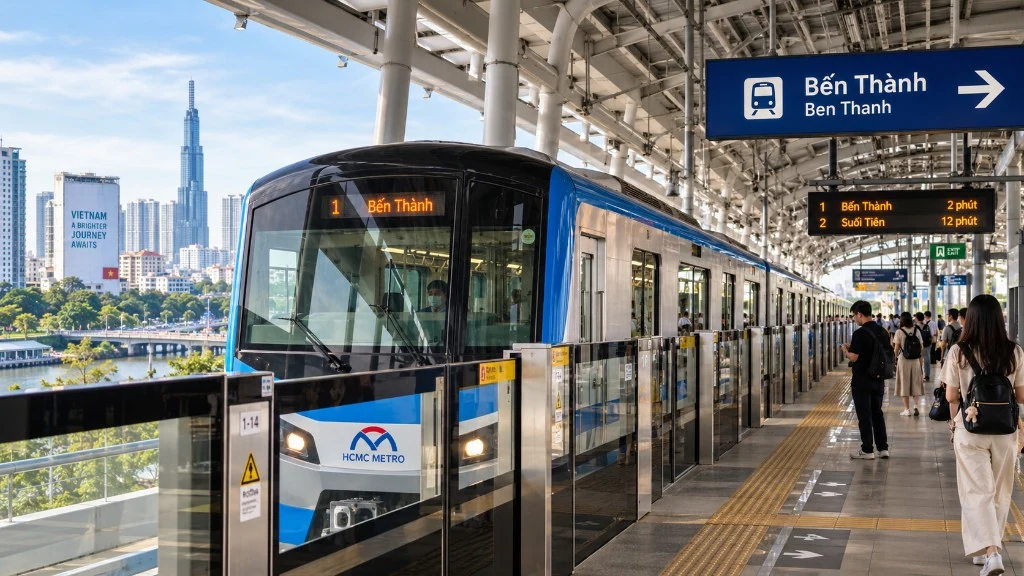
A flight from Singapore to Ho Chi Minh City, a production-line check at a factory in Vietnam the next day, then Kuala Lumpur on the weekend to see a client. On a Southeast Asia trip like that, the bag may be one carry-on, but the phone is full: client contacts, factory addresses, meeting invites, company cloud files, Grab, and bank verification texts. All of it has to be reachable when you need it.
Working abroad is different from a vacation in one practical way. A lot of it cannot wait until you are back at the hotel. The driver cannot find the pickup point, the factory switches the entrance at the last minute, or a manager suddenly wants a deck. Those moments usually happen while you are still moving. A business trip needs a connection you can arrange ahead of time, and a backup when something goes wrong, more than it needs the highest possible speed.
The examples here are Singapore, Vietnam, and Malaysia, the three stops Taiwan business travelers run often. The notes cover how to check signal around an industrial area, how to choose a cross-border eSIM, how to use Grab on a work trip, how to share a phone hotspot with a laptop, and how to keep a Taiwan number for company or bank texts.
Start with the itinerary: three countries do not always mean one eSIM
| The trip | What usually comes up | How to arrange the connection |
|---|---|---|
| Singapore for 1–2 days, a connection plus meetings | A ride, email, a short video call | A short-day Singapore plan. Confirm the hotspot first |
| Vietnam for 4–10 days, factory visits | Navigation in the industrial area, file uploads, video | Pick a Vietnam network for the factory address, and line up a different carrier as backup if you need one |
| Singapore and Malaysia, back and forth | Crossing the border, maps, work messages | Compare the Singapore–Malaysia–Thailand eSIM. It covers only Singapore, Malaysia, and Thailand, uses an Indonesia IP, and does not include Vietnam |
| Singapore, Vietnam, and Malaysia | Moving among the three countries on a tight schedule | Confirm coverage country by country. If needed, pair a Singapore–Malaysia plan with a Vietnam-only plan. The Singapore–Malaysia–Thailand eSIM still covers only those three countries, uses an Indonesia IP, and does not include Vietnam |
| A team splitting up for site visits | Passing files at short notice, remote meetings | Each main contact keeps a separate connection, not only one person’s hotspot |
The Singapore–Malaysia–Thailand eSIM currently on the JEKO site covers only Singapore, Malaysia, and Thailand, uses an Indonesia IP, and does not include Vietnam. That matters especially for travelers visiting ASEAN supply chains. A name that includes “Southeast Asia” does not mean the whole of Southeast Asia will work. Before you buy, still check the country list, the number of days, the carrier, and the hotspot limits one by one.
Factory visits in Vietnam: the city can have a signal, and the plant is not always the same
Vietnam is a supply-chain base for a lot of Taiwan companies in electronics, machinery, textiles, and components. Bac Ninh and Hai Phong in the north, and Binh Duong, Dong Nai, and the area around Ho Chi Minh City in the south, are common stops. Many itineraries still have a morning meeting in the city, then a ride into an industrial park in the afternoon. Moving from an office tower to a plant with a metal roof can change what the phone does.
Coverage in an industrial area is easy to miss, because the shaded area on a map does not mean the same speed at the far end of the production line. Thick walls, metal machinery, basement floors, how far the building sits from a cell site, and how many people are online at once can all affect mobile data. An industrial park does not always have a usable signal. If you need a live connection so Taiwan headquarters can watch equipment running, ask the contact before the visit: Does the meeting room offer guest Wi-Fi? Which areas ban phones? Can the video call move to the office?
How should you read Viettel, VinaPhone, and MobiFone?
Vietnam’s main networks include Viettel, VinaPhone, and MobiFone. Viettel has an advantage in geographic coverage across the country, so it is worth looking at first when the trip includes a suburban factory or a highway between provinces. VinaPhone and MobiFone also perform well in major cities such as Hanoi and Ho Chi Minh City. The 2026 nPerf mobile report lists VinaPhone as the leader on overall performance. That ranking is a national result, not a guarantee of speed inside one factory, and it shows you cannot judge every site only by which carrier has the most cell sites.
When you pick a plan, this order helps. First get the actual address, or a pin on Google Maps or a local map, from the factory, then check that carrier’s coverage map. If you need to, ask the local contact to test upload speed and video inside the plant. JEKO’s Vietnam products list different plans on Viettel, VinaPhone, MobiFone, Wintel, and others, but not every eSIM can switch freely among all of those carriers. Which network you can actually join depends on the plan you buy.
If the work is only LINE, email, and navigation, data is usually easier to manage. If you have to send back a hundred-plus inspection photos or video from the site, or keep Teams open for a long stretch, leave more high-speed data. A plan that slows down after the daily high-speed allowance can still handle chat, and it can still be a poor fit for uploading a large batch of images.
Leave more time when you visit the north or the south
The ride from Hanoi to northern industrial parks, and from Ho Chi Minh City to plants nearby, can hit the commute. A distance that looks short on the map is not the same as arriving on time. Before you leave, put the Vietnamese factory name, the park name, the street number, the contact, and the guard-room phone on one sheet you can read offline. That holds up better than opening a search only after you arrive.
A site sometimes has more than one gate. The Grab pin may land on the admin center or the park gate, which is not always the visitor entrance the supplier named. Ask the host to send a pin ahead of time, and the driver has a better chance of stopping in the right place. If ride-hailing is thin at a remote site, ask them to help arrange the car for the return as well.
A short Singapore trip: pick the work rhythm back up after you land
Singapore is easy to move around, and many Taiwan business travelers book 1 or 2 days to visit a regional headquarters, connect through the airport, or sit in a meeting. That kind of trip does not always need a lot of data. It does depend on the first connection after landing: reaching the person meeting you, opening the hotel address, calling a Grab, or receiving a meeting time that just changed.
Mobile figures published by the Singapore government in 2025 show that major operators cover above 99% of the country outdoors on 4G, and above 95% outdoors on 5G. Those figures describe the overall network build-out. Basements of commercial buildings, exhibition halls, and indoor corners can still have a gap. For a business traveler who is only moving between a downtown office and the airport, put the attention on the data cap, hotspot sharing, the number of valid days, and after-sales support. An ad that says 5G is not the whole decision.
If the next day you still have to cross by car into Johor Bahru in Malaysia, a multi-country plan that clearly covers Singapore and Malaysia is usually easier than installing again at the border. After you cross, the phone still has to search for a local partner network. “No SIM swap” does not mean the line will never pause briefly while it switches.
Before you leave, save client cards, the hotel booking, the meeting building, and the check-in QR code as offline files. That is a few minutes well spent. If the hall is crowded and the signal is congested, you can still pull those files up without downloading them again.
A Malaysia trip: look past Kuala Lumpur, and look at where the plant sits
A Malaysia itinerary might be a meeting room in Kuala Lumpur, or a factory, warehouse, or logistics site in Selangor, Johor, or Penang. What the phone does in the city does not transfer straight to a factory warehouse. A plan that advertises 5G also does not mean every stretch of highway, or every indoor plant, will have 5G. A factory zone does not always have a signal.
Figures from Malaysia’s official investment agency show that in July 2025 national 5G coverage reached about 82.4% of populated areas. That is a share of places where people live, not of the country’s land area. The build-out is still expanding, and the figure is not a promise that one suburban warehouse has a signal. Carriers people often see locally are Maxis, CelcomDigi, and U Mobile. JEKO’s Malaysia product page also lists these networks and native-IP specs by plan. If you need a local company system, or you spend a lot of time at plants, check the factory address against the network you chose.
If you are running both Singapore and Malaysia, work files often keep updating around the time you clear the border. Leave important meetings with some slack, and download the files ahead of time. Whether you cross into Johor Bahru or fly to Kuala Lumpur, the last leg from the transport hub to the industrial park needs a pickup you have actually confirmed. That ride is easier to underestimate than it looks.
Grab for work rides: set up the account, the pin, and the receipts first
In Singapore, Vietnam, and Malaysia, Grab is a ride a lot of business travelers use. The designated pickup at the airport, which car types a city has, how you pay, and whether a car is available at all can still change from one place to another.
Download Grab while you are still in Taiwan, finish account verification, and set a payment method you can actually use. After you land, check that the app pin is correct, then look at the fare estimate and the pickup point. When the driver messages you, match the plate and the car type on site. A rush is a poor reason to get into a car that does not match the order.
If the factory visit is on a fixed schedule, ask the host whether a return car is realistic. On the edge of a city, booking a car ahead of time, or having the supplier arrange the ride, is often steadier than calling a Grab the same day.
How do you keep receipts for a company trip?
An ordinary Grab trip can be documented from the order history and the e-receipt inside the app. A company that needs fuller travel management can look at Grab for Business, so staff ride on a company account under company rules, and a manager can review and pull the costs together. Grab’s own list of service areas includes Singapore, Vietnam, and Malaysia. VAT documents, the company name on the paperwork, and payment methods are not the same in every country. Ask finance which document they actually need before the trip, so you are not chasing missing paperwork after you get home.
In Vietnam in particular, if the company needs a formal local VAT e-invoice, apply under the Grab for Business terms in Vietnam. An ordinary electronic trip receipt is not necessarily the tax invoice the company’s accounting will accept.
Traveling with a laptop: can a phone hotspot be the main connection?
You can consider it, and treat it as a convenient temporary way to work, not as a full stand-in for a fixed office network.
While you wait for a meeting at a client’s office, opening a hotspot for a MacBook or a Windows laptop is practical for email, cloud documents, and looking up a quote. A hotspot also drains the phone battery, and it burns through high-speed data faster. Background system updates and large cloud-folder syncs on the laptop often use more data than you expect.
Before the work starts, confirm that the JEKO plan you bought explicitly supports hotspot sharing. Even when the local carrier network itself allows a hotspot, a particular travel eSIM can still limit sharing, data, or the high-speed allowance. If the day is one long video call, keep the hotel or the meeting-room network as a second option.
How should you set the laptop so the data does not disappear at once?
- On Windows, set the hotspot Wi-Fi as a metered connection, which cuts some background downloads.
- On a MacBook, pause large cloud-drive sync and update the files after the meeting.
- Test the microphone and headset before a video meeting, and switch to audio-only if you need to. If you are only sharing a spreadsheet, you do not have to keep a high-resolution camera on the whole time.
- For CAD files, video, or a large batch of photos, use the hotel network or a fixed network the company has approved. A transfer that breaks in the car often has to start over.
- Confidential company data still follows the company’s security policy: the company VPN, device management, and multi-factor authentication. An eSIM is not a company VPN, and it does not automatically add enterprise-grade encryption.
How much data does a business trip use? Start with the work that eats the connection
Two people can both be out for five days and need very different amounts of data. One only receives a few dozen emails a day. Another has to watch a factory test feed from afar. When you plan, split the work into types. Maps, text chat, and ordinary email are the everyday baseline. Downloading a deck, syncing a quote file, and uploading inspection photos need more. Video meetings, and sharing a hotspot with a laptop for a long time, can use up that day’s high-speed allowance in a short window.
For a trip that is mostly client visits, with the meeting back at the hotel in the evening, a daily plan or a moderate total-data plan can fit. If you have to send video several times while you are moving, and the laptop stays on the phone network all day, look first at whether the total is enough, whether the slowed speed can still do the work, and whether you can add data mid-trip. A product labeled unlimited still needs a closer look: no slowdown, a slowdown after a daily high-speed allowance, or some other fair-use rule.
If two colleagues travel together, saving one eSIM by putting every device on the same phone hotspot is a weak trade. If that phone runs out of battery, gets carried into another building, or walks into a dead spot, the other person’s laptop drops off with it. Two separate connections are more practical for a team that has to split up.
Keep the Taiwan number: bank OTPs and company calls
A lot of people on the road still have to receive texts from a Taiwan bank, company account codes, and sometimes a client call. If the phone supports dual SIM, leave voice and SMS on the original Taiwan number, and let the travel eSIM provide local mobile data.
On an iPhone, open Settings → Cellular and confirm both lines are on. Set Cellular Data to the Southeast Asia eSIM, then turn off Allow Cellular Data Switching if that fits how you use the phone, so data does not slip onto the Taiwan number. Data roaming on the Taiwan primary line is better left off. If you still need SMS or calls, that original number has to be able to register on a roaming network locally. Whether that costs money, and whether an OTP arrives, depends on the original carrier and on the system that sends the message.
Android menu names change by brand. You usually set the data SIM and the calling SIM under Settings → SIM card manager / Mobile network. A company-issued phone also needs a check first: whether adding an eSIM is allowed, or whether an MDM policy blocks it.
Once you arrive, the test that matters is not a speed test. Open work email, receive one test message, and check that the company VPN, the cloud drive, and the apps you actually use can sign in. If company systems limit the source country or IP, a roaming eSIM on a foreign IP can be blocked. Ask IT for help. Do not turn the company’s protection settings off on your own.
The trip notice lands late. What can you still prepare in the 20 minutes before you leave?
If the phone definitely supports eSIM, buying online and getting the install details from the order or from email is usually more flexible than swapping a card at a shop. Sending the QR code, payment checks, and downloading the profile on the phone can all take time. Do not treat “installed in 3 minutes” as something every device will do.
A more useful approach is to install and name the line while you still have Wi-Fi at the airport or at home. Check the plan’s validity rule, then decide whether to turn that line off for now. Some Vietnam plans start counting days as soon as you download them, and that includes some local-number plans. Do not treat every plan as if the clock starts only on the first connection. If a company phone locks the carrier or blocks other SIMs, handle that before you leave.
A quick check before departure: the travel eSIM order, client and driver phone numbers, the meeting invite, offline maps, how you sign in to the company VPN, a power bank, and whether the payment card works at the destination. Being able to start work after you land matters more than buying the largest data plan.
The connection suddenly fails. Check in this order
If the phone spins at the airport, in an underground car park, or inside the plant, first check which SIM is set for mobile data. Then turn Wi-Fi off and test the eSIM alone, so the phone is not stuck on a weak venue network. If the phone shows a signal and still cannot get online, check whether the plan requires data roaming to be on, whether the high-speed data is already used up, and whether the order asks you to set an APN.
If it still will not connect, toggle airplane mode briefly, then test from a more open spot. If you have to pick a carrier by hand, choose only a partner network listed on the product page. Do not delete the eSIM in a hurry. Some QR codes cannot be installed a second time. If a meeting is happening right then, use guest Wi-Fi the client has approved, or switch to a backup connection, and send the phone screens and the order details to support afterward.
JEKO eSIMs for Southeast Asia work trips: match the itinerary, and do not force one plan onto every country
For a last-minute trip or a short site visit, the useful point of JEKO is that you can buy the days and the data from Taiwan first, without pulling out the original SIM. When you compare, split the options into these three:
Vietnam only: Start from the JEKO Vietnam eSIM page for daily plans, total-data plans, and some native-IP plans, and consider Viettel, VinaPhone, or another available network based on where the plant is. If you need a local phone number, choose a plan that clearly says it includes a number. Some of those local-number plans start the day count on download.
Singapore only: The JEKO Singapore eSIM page has short-day, total-data, and daily options. For a same-day turnaround that is mostly navigation and email, compare the lower-data plans first. If you keep a hotspot on, confirm the sharing specs and the high-speed allowance.
Malaysia, or Singapore and Malaysia across the border: The JEKO Malaysia eSIM page is where you look at local native networks. If you will cross between Singapore and Malaysia, also compare the Singapore–Malaysia–Thailand plan on the site. The third country on that three-country plan is Thailand, not Vietnam. It covers only Singapore, Malaysia, and Thailand, and it uses an Indonesia IP.
Before you pay, also check the valid days, whether data roaming must be on, the available IP and carrier, hotspot sharing, what happens when the data runs out, and whether the phone supports eSIM. If company finance needs a Taiwan tax invoice with a company ID, or a specific document for reimbursement, ask JEKO support which documents that order can issue. Do not wait until after you have paid. Not every order can issue that invoice.
A 7-day supply-chain trip: how can you arrange the network?
Say day 1 is a flight into Singapore to visit the regional office, day 2 is Ho Chi Minh City for a meeting with a partner plant, days 3 and 4 are southern factory visits, day 5 is a flight to Kuala Lumpur, day 6 is a site visit, and day 7 is the flight back to Taiwan.
The practical approach for this itinerary is not forcing one card to cover every country. First check whether JEKO has a plan that fully covers these three countries and also meets the hotspot need. If it does not, one arrangement is a plan that works in Singapore and Malaysia, paired with a Vietnam-only eSIM. The Singapore–Malaysia–Thailand plan covers only Singapore, Malaysia, and Thailand, uses an Indonesia IP, and does not include Vietnam, so Vietnam still needs its own plan. Some phones can store several eSIM profiles, and you point mobile data at the one you want when you switch. How many can be on at once depends on the model.
Each morning before you leave the hotel, update the schedule, save the visit address, and check the data you have left. If the afternoon needs a large work upload, confirm meeting-room Wi-Fi with the supplier, or send the files after you are back at the hotel, instead of spending the last of the data on a large file in the car.
Southeast Asia business eSIM FAQ
Can one Singapore–Malaysia–Thailand eSIM be used in Vietnam?
No. JEKO’s current Singapore–Malaysia–Thailand plan covers only Singapore, Malaysia, and Thailand, uses an Indonesia IP, and does not include Vietnam. For Vietnam, choose a plan that clearly supports Vietnam.
Is Viettel always the better choice in a Vietnam industrial area?
Viettel is worth considering first for geographic coverage across the country, but inside a particular plant it still depends on the cell site and the building on site. An industrial park does not always have a usable signal. Judge it from the actual factory address, the partner carrier on the product, and a test by someone who is there.
Can a JEKO eSIM open a hotspot for a laptop?
Some plans can. Hotspot rules, the daily high-speed allowance, and sharing limits differ by product. If the meeting depends on the laptop, confirm it on the purchase page.
When you cross between Singapore and Malaysia, does the phone join the local network on its own?
A plan that covers both countries can usually search for and join a partner carrier, but the switch at the border can take a little time. If the connection acts up, toggle airplane mode and check the data-roaming setting.
Can a travel eSIM receive OTPs from a Taiwan bank?
A data-only eSIM usually does not provide SMS on your original Taiwan number. Keep the Taiwan SIM line and receive those texts through the original carrier’s roaming. Whether they arrive depends on what the bank and the original carrier actually support.
Can Grab be registered with a Taiwan number?
You can set up the account in Taiwan with a number you can verify, and test the payment settings. Eligibility and the verification steps can change by account and by region. After you arrive, you do not have to change the number tied to Grab just because you are using a travel eSIM.
Does a company VPN get safer if you use an eSIM?
An eSIM is only the way you connect. The company VPN, device encryption, MFA, and company account permissions still follow company policy. Buying an eSIM is not a reason to skip them.
Can trip expenses be invoiced with a Taiwan company tax ID?
Contact JEKO support before you pay, and confirm which documents and name details that order can provide. This piece does not assume every product supports the same reimbursement format, and it does not promise that every order can issue a Taiwan tax invoice with a company ID.
A cross-border trip always has last-minute changes. If the connection and the backup are ready before you go, you can spend your attention on the meetings and the partnerships that actually matter once you arrive. To compare plans you can buy now, start from JEKO eSIM plans by country, and choose from the countries, the days, and the work this trip actually needs.