How Much Does a 3-Day, 2-Night Osaka Trip Cost? Budget, Yen Cash, and Saving Tips
Osaka is the city many travelers from Taiwan pick for a first independent trip to Japan. The flight is short, getting around is easy, and there is plenty to eat. In three days and two nights you can cover Dotonbori, Shinsaibashi, Umeda, and Osaka Castle, and even fit in Universal Studios Japan.
Once planning actually starts, the first question is often not how to order the sights, but:
How much does a 3-day, 2-night Osaka trip really cost?
How much yen cash should I bring?
How do I estimate flights, hotels, transport, meals, and attraction tickets?
In general, a 3-day, 2-night independent trip to Osaka from Taiwan comes to about NT$18,000–35,000 per person. Without flights and shopping, basic travel costs land around NT$10,000–18,000. The real total depends on the season, airfare, where you stay, whether you add Universal Studios Japan, and how much you shop.
If this is your first Osaka trip, do not budget only the lowest figure. Osaka can be done on a tight budget, but Shinsaibashi, Dotonbori, Umeda department stores, drugstores, and souvenir shops easily push spending past the plan. This article walks through flights, hotels, transport, meals, tickets, yen cash, and ways to save, so you can set a 3-day, 2-night Osaka budget before you leave.
Osaka 3 days, 2 nights cost overview: how much should one person prepare?
A 3-day, 2-night Osaka trip usually falls into four styles: budget, standard, comfortable, and a version that includes Universal Studios Japan.
If you fly a low-cost carrier, stay in a budget business hotel, and skip high-end restaurants, about NT$18,000–23,000 per person can cover a basic 3-day, 2-night Osaka trip.
If you want a hotel that is easy to get around from, a normal mix of city sights, food, and a little shopping, about NT$23,000–30,000 per person is a more realistic figure.
If you want a better hotel, yakiniku or an izakaya, more shopping, or a Universal Studios Japan day, the budget can reach NT$30,000–45,000 or more.
In short:
| Trip style | Who it fits | Total budget per person |
|---|---|---|
| Budget | Low-cost flight, budget stay, light shopping | NT$18,000–23,000 |
| Standard | First Osaka trip, normal food and sights | NT$23,000–30,000 |
| Comfortable | Better hotel, more restaurants, more shopping | NT$30,000–45,000+ |
| With Universal Studios Japan | One USJ day | NT$35,000–50,000+ |
If you only want the Osaka city center, food, and photos, and you are not adding Universal Studios Japan or a lot of shopping, preparing NT$23,000–30,000 per person leaves more room.
If you are going to Universal Studios Japan, or you want a popular hotel near Namba or Shinsaibashi, plan at least NT$35,000 or more.
Osaka 3 days, 2 nights cost breakdown
An independent Osaka trip is mostly six items: flights, hotels, transport, meals, attraction tickets, and shopping. These are common ranges for three days and two nights.
| Cost item | Budget | Standard | Comfortable |
|---|---|---|---|
| Round-trip flight | NT$7,000–10,000 | NT$10,000–14,000 | NT$14,000 or more |
| Hotel, 2 nights | NT$3,000–5,000 | NT$5,000–8,000 | NT$8,000 or more |
| Transport | NT$1,200–2,500 | NT$2,500–4,000 | NT$4,000 or more |
| Meals | NT$2,500–4,000 | NT$4,000–6,000 | NT$6,000 or more |
| Attraction tickets | NT$1,000–3,000 | NT$3,000–6,000 | NT$6,000 or more |
| Shopping budget | NT$3,000–5,000 | NT$5,000–10,000 | NT$10,000 or more |
| Total | NT$18,000–23,000 | NT$23,000–30,000 | NT$30,000–45,000+ |
This table is based on a typical 3-day, 2-night independent Osaka trip for travelers from Taiwan. The actual amount changes with peak and off-peak seasons, the exchange rate, airfare sales, the neighborhood, and how you spend.
If flights, hotels, and tickets are already paid by card, you can bring less yen cash. If you prefer cash, want small-shop food, markets, or a lot of shopping, raise the cash budget separately.
How to estimate Osaka 3-day, 2-night airfare
Flights from Taiwan to Osaka usually land at Kansai International Airport. Airfare is the line that moves the most in a 3-day, 2-night budget. It depends on the airline, travel dates, when you buy, and whether a long holiday falls in the middle.
As a rough guide, round-trip Taiwan–Osaka fares look like this:
| Fare type | Round-trip cost |
|---|---|
| Low-cost sale | NT$6,000–9,000 |
| Typical low-cost | NT$8,000–12,000 |
| Full-service airline | NT$12,000–18,000 |
| Cherry blossom, autumn leaves, holiday peak | NT$15,000–25,000+ |
If you want to lower the total for three days and two nights, airfare is the item worth planning earliest. Avoid cherry-blossom season, autumn-leaf season, summer and winter school holidays, and Taiwan’s long weekends, and watch fares 2–3 months ahead.
A low-cost carrier is the cheaper way to do Osaka on a budget. Those fares often exclude checked bags, meals, and seat selection. If you shop or travel with a large bag, add the checked-bag fee to the total.
Osaka 3 days, 2 nights hotels: where is most convenient?
A 3-day, 2-night Osaka trip usually means 2 nights. Where you stay changes both how easy the days are and the budget. First-timers most often stay in Namba, Shinsaibashi, Umeda, Nipponbashi, or Tennoji.
If you want food, shopping, and easy transport, Namba and Shinsaibashi are the most popular. Both sit near Dotonbori, Ebisubashi, and Shinsaibashi shopping street, so evening walks and late snacks are simple.
If you also want Kyoto, Kobe, or Shin-Osaka, Umeda fits better. Transfers are plentiful and department stores are concentrated there.
If you want to spend less on the room, look at Nipponbashi, Tennoji, or somewhere along the subway. Those areas are still easy to reach, and rates are usually more flexible than the core of Namba and Shinsaibashi.
| Area | Advantage | Who it fits |
|---|---|---|
| Namba | Easy transport, lots of food, close to Dotonbori | First independent Osaka trip |
| Shinsaibashi | Easy shopping | People who like to shop |
| Umeda | Many department stores, easy transfers | People adding Kyoto or Kobe |
| Nipponbashi | More flexible prices, near the anime district | Budget travelers |
| Tennoji | More affordable rooms, still easy to reach | People cutting hotel cost |
Hotel budgets can be read like this:
| Stay type | 2 nights, per person |
|---|---|
| Hostel / capsule hotel | NT$1,500–3,000 |
| Budget business hotel | NT$3,000–5,500 |
| Mid-range hotel | NT$5,500–8,000 |
| Higher-end hotel | NT$8,000 or more |
Osaka Prefecture also charges an accommodation tax. Under the prefecture’s rule, a stay under 5,000 yen per person per night is exempt. From 5,000 yen up to but not including 15,000 yen, the tax is 200 yen. From 15,000 yen up to but not including 20,000 yen, it is 400 yen. At 20,000 yen or more, it is 500 yen. When you book, check whether the tax is already in the room rate or paid on site.
Osaka 3 days, 2 nights transport: subway, airport, and passes
Transport for three days and two nights is mainly four pieces: Kansai Airport to the city and back, the Osaka subway, moving between sights, and any trip to Universal Studios Japan, Kyoto, or Nara.
If you stay inside Osaka, transport is usually about NT$1,200–2,500.
If you add Universal Studios Japan, Kyoto, or Nara, plan about NT$2,500–4,000.
From Kansai Airport to central Osaka, common options are Nankai Electric Railway, JR Haruka, the airport limousine bus, and a taxi or private car.
If you stay in Namba or Shinsaibashi, Nankai Electric Railway is usually convenient.
If you stay in Tennoji or Shin-Osaka, or you are going straight to Kyoto, JR Haruka fits better.
If you have a lot of luggage, or the hotel is next to a bus stop, the limousine bus is another option.
| Transport | Who it fits |
|---|---|
| Nankai Electric Railway | Staying near Namba or Shinsaibashi |
| JR Haruka | Tennoji, Shin-Osaka, or toward Kyoto |
| Limousine bus | Lots of luggage, fewer transfers |
| Taxi / private car | A group, a late arrival, or a trip with children |
Inside the city, Osaka Metro is the usual way to move. Namba, Shinsaibashi, Umeda, Tennoji, Osaka Castle, and Tsutenkaku are all reachable by subway. If the plan is simple, tapping ICOCA in and out of stations is enough.
Osaka Amazing Pass, ICOCA, or Osaka e-Pass: which one pays off?
Many people planning three days and two nights in Osaka hesitate over the Osaka Amazing Pass. No pass is always the better deal. It depends on the itinerary.
The Osaka Amazing Pass suits someone who visits several partner sights in one day and also rides the subway a lot. The official 2026 Osaka Amazing Pass has a 1-day ticket and a 2-day ticket. The 1-day ticket is 3,500 yen and the 2-day ticket is 5,000 yen, for designated transport and partner facilities.
If one day includes Osaka Castle, Tsutenkaku, the Umeda Sky Building, a sightseeing cruise, and other sights, the Osaka Amazing Pass can pay for itself.
If the day is mostly shopping in Shinsaibashi, eating in Dotonbori, and department stores in Umeda, with few sights, ICOCA is more flexible.
Osaka e-Pass is closer to an attraction ticket. The official description says you can enter more than 25 sightseeing spots in Osaka with a QR code. If you want the sights but will arrange transport yourself, compare Osaka e-Pass with the Osaka Amazing Pass.
A simple way to choose:
| Pass | Who it fits |
|---|---|
| Osaka Amazing Pass | Several sights in one day, plus many subway rides |
| ICOCA | A flexible plan, mostly shopping and food |
| Osaka e-Pass | An attraction pass, with transport arranged separately |
On a first 3-day, 2-night Osaka trip, sketch the days first, then decide whether to buy a pass. Do not buy one only because someone else recommended it. You may end up rushing the days just to make the pass pay off.
Osaka 3 days, 2 nights meals: how much is enough per day?
Osaka is called Japan’s kitchen, and the food options are wide. Convenience stores, ramen, takoyaki, and okonomiyaki sit next to yakiniku, sushi, izakaya, and dessert cafes.
To keep meals cheap, about NT$800–1,300 a day is enough.
For a normal mix of local food, plan about NT$1,300–2,000 a day.
If you add yakiniku, sushi, an izakaya, or a dessert cafe, a day can reach NT$2,000–3,500 or more.
| Meal style | One day | 3 days, 2 nights |
|---|---|---|
| Budget eating | NT$800–1,300 | NT$2,500–4,000 |
| Standard eating | NT$1,300–2,000 | NT$4,000–6,000 |
| Food-focused traveler | NT$2,000–3,500+ | NT$6,000–10,000+ |
A practical split is convenience-store breakfast, ramen or a set meal at lunch, and one distinctive restaurant at dinner. You still eat Osaka food, and the meal total stays easier to control.
For example, breakfast can be a convenience-store rice ball, sandwich, and coffee; lunch can be ramen, a rice bowl, or a set meal; dinner can be yakiniku, an izakaya, or something in Dotonbori. Over three days and two nights, that costs less than eating in a restaurant every meal.
Osaka 3 days, 2 nights attraction ticket costs
Popular sights in the city include Osaka Castle, Tsutenkaku, the Umeda Sky Building, Abeno Harukas, the Dotonbori river cruise, Osaka Aquarium Kaiyukan, and Universal Studios Japan.
Without Universal Studios Japan, attraction tickets can be about NT$1,000–3,000.
With Universal Studios Japan, the total jumps, because the ticket, express pass, park food, transport, and shopping are all extra.
A 3-day, 2-night Osaka trip without Universal Studios Japan fits a tighter budget better. You can still do Osaka Castle, Tsutenkaku, Dotonbori, Shinsaibashi, the Umeda night view, and Shinsekai, and the cost is easier to hold.
If you add Universal Studios Japan, set aside at least another NT$7,000–15,000. That range covers the ticket, express pass, park food, transport, and souvenirs. In a busy period the express pass costs more, and the total can rise again.
How much yen cash for 3 days and 2 nights in Osaka?
If flights, the hotel, and some tickets are already paid by card, one person should bring about 30,000–50,000 yen in cash for three days and two nights in Osaka.
If you shop heavily, eat yakiniku or at an izakaya, visit small market shops, or do not want to keep using a card, about 50,000–80,000 yen is more comfortable.
| How you travel | Suggested cash |
|---|---|
| Mostly card, only small cash | 30,000 yen |
| A normal trip, meals and transport in cash | 50,000 yen |
| Shopping, restaurants, and small shops | 80,000 yen or more |
Many department stores, drugstores, chain restaurants, and hotels in Osaka take cards, but going with no cash is a poor idea. Food stalls, some ramen shops, markets, capsule-toy machines, lockers, and small shops may still want cash.
If the flight, hotel, Universal Studios Japan ticket, and transport passes were already charged in Taiwan, on-site spending is mostly meals, transit top-ups, small purchases, and souvenirs. In that case, 30,000–50,000 yen is usually enough.
If you expect to buy drugstore items, clothes, anime goods, electronics, or luxury goods in Osaka, prepare both extra cash and card limit. Do not estimate those from the basic trip budget alone.
How to set a shopping budget for 3 days and 2 nights in Osaka
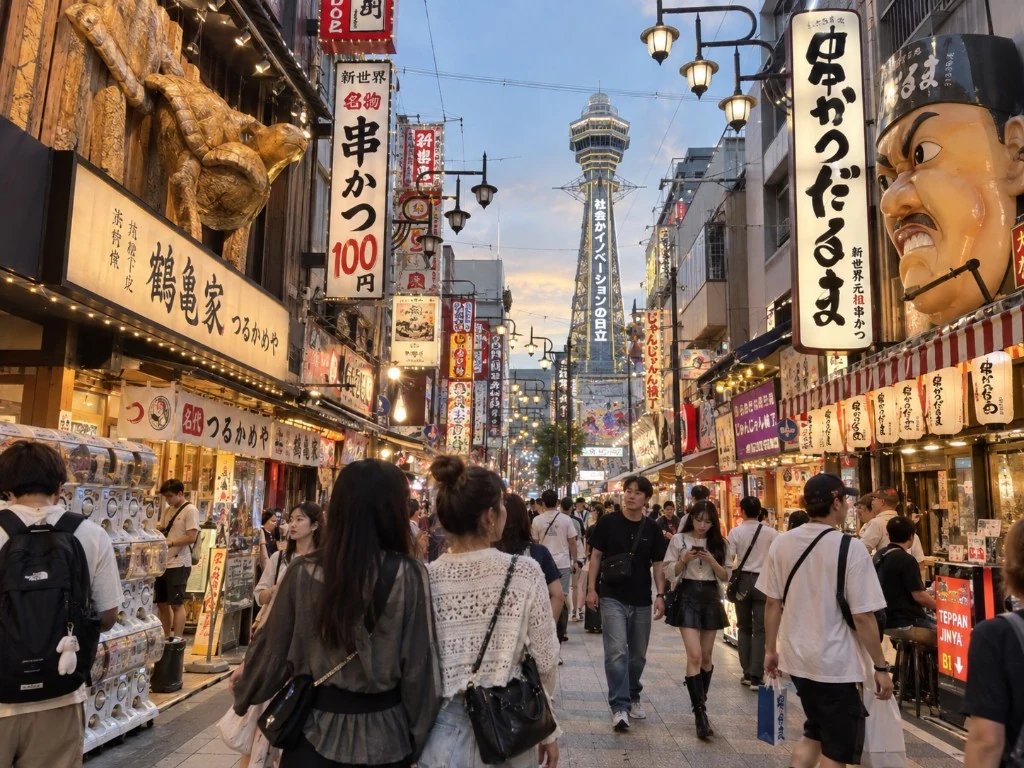
Shopping in Osaka overruns easily, especially in Shinsaibashi, Dotonbori, Umeda department stores, the Nipponbashi anime street, and drugstores.
A few souvenirs can be about NT$3,000–5,000.
Drugstore items, snacks, and souvenirs are closer to NT$5,000–10,000.
Clothes, electronics, anime goods, or luxury items can reach NT$10,000–30,000 or more.
| Shopping type | Budget |
|---|---|
| A few souvenirs | NT$3,000–5,000 |
| Drugstore, snacks, souvenirs | NT$5,000–10,000 |
| Clothes, luxury goods, electronics, anime goods | NT$10,000–30,000+ |
Count shopping on its own. Do not fold it into the basic trip cost. The basic cost of an independent Osaka trip is not always high. What blows the budget is usually the drugstore, souvenirs, department-store shopping, and tickets added on the spot.
Before you leave, write a must-buy list: drugstore items, snacks, gifts for family, gifts for friends. When you see a discount in the store, you are less likely to keep adding things.
Ways to spend less on a 3-day, 2-night Osaka trip
1. Avoid long holidays and peak seasons for the flight
During cherry-blossom season, autumn-leaf season, school holidays, and Taiwan’s long weekends, both flights and hotels in Osaka usually cost more. Weekday departures, red-eye flights, and low-cost sales are the cheaper options.
If your dates can move, skipping the popular Friday-out, Sunday-back pattern also makes cheaper fares easier to find.
2. You do not have to stay in the middle of Shinsaibashi
Shinsaibashi and Namba are the most convenient, and room rates are usually higher. To spend less, look at Nipponbashi, Tennoji, Shin-Imamiya, or somewhere along the Midosuji subway line.
If the hotel is not far from a station, moving around is still easy. For three days and two nights, what matters is not sitting in the busiest shopping core. It is not being too far from a station.
3. Do not buy a pass just because it was recommended
The Osaka Amazing Pass, Osaka e-Pass, and ICOCA each fit a different kind of trip.
If you are not visiting many sights, a pass is not always cheaper.
List the places you actually want, then add up tickets and transport. The Osaka Amazing Pass is more likely to pay off if you visit three or more partner sights in one day.
4. Use convenience stores for breakfast and a late snack
Japanese convenience stores carry a lot: breakfast, coffee, rice balls, sandwiches, fried chicken, and desserts. If breakfast is from a convenience store on a 3-day, 2-night trip, that saves a real amount on meals.
A late snack can also be hot food from a convenience store or a discounted supermarket bento. That is cheaper than an izakaya every night.
5. Group sights on the same day
If you buy the Osaka Amazing Pass, put Tsutenkaku, Osaka Castle, the Umeda Sky Building, the sightseeing cruise, and similar sights on the same day. That is how the pass is more likely to pay for itself.
If those sights are spread across three days, transport and time can cost more instead.
6. Write a shopping list first
Drugstores, department stores, and souvenir shops in Osaka make it easy to overspend. Write a must-buy list before you leave, and set a ceiling.
For example: drugstore NT$3,000, souvenirs NT$2,000, personal shopping NT$5,000. You are less likely to keep adding items because of a promotion.
Suggested budget splits for 3 days and 2 nights in Osaka
Budget style: about NT$21,000
The budget style fits someone with a limited amount who mainly wants central Osaka. The days can include Dotonbori, Shinsaibashi, Osaka Castle, Tsutenkaku, Shinsekai, and the Umeda night view, without Universal Studios Japan or expensive restaurants.
| Item | Budget |
|---|---|
| Flight | NT$8,000 |
| Hotel | NT$4,000 |
| Transport | NT$1,500 |
| Meals | NT$3,000 |
| Sights | NT$1,500 |
| Shopping | NT$3,000 |
| Total | About NT$21,000 |
The point of this version is to hold the flight and the hotel, and to eat mostly at convenience stores, ramen shops, set-meal places, and snack stalls. The budget is lower, and you can still see central Osaka properly.
Standard style: about NT$35,000
The standard style fits a first independent trip to Osaka, and most people can estimate from this version. Stay in Namba, Shinsaibashi, or Umeda, eat normally, and keep room in the budget for food, sights, and shopping.
| Item | Budget |
|---|---|
| Flight | NT$12,000 |
| Hotel | NT$6,000 |
| Transport | NT$2,500 |
| Meals | NT$5,000 |
| Sights | NT$3,500 |
| Shopping | NT$6,000 |
| Total | About NT$35,000 |
If you do not want to hold back, and you still want food, shopping, and souvenirs, this budget is more comfortable.
With Universal Studios Japan: about NT$42,000–68,000
If three days and two nights include Universal Studios Japan, give the whole second day to USJ. Use day 1 and day 3 for the city and shopping, so the trip feels less rushed.
| Item | Budget |
|---|---|
| Flight | NT$12,000–16,000 |
| Hotel | NT$6,000–10,000 |
| Transport | NT$3,000–4,000 |
| Meals | NT$5,000–8,000 |
| USJ and sights | NT$8,000–15,000 |
| Shopping | NT$8,000–15,000 |
| Total | About NT$42,000–68,000 |
Universal Studios Japan raises the whole budget, especially the express pass, park food, and souvenirs. If the budget is tight, you can buy only the ticket and skip the express pass, but expect longer queues.
How to order a 3-day, 2-night Osaka itinerary so it costs less
If the goal is to control the budget, put sights that are close together on the same day and cut the back-and-forth.
Day 1: Arrive in Osaka, Namba, Dotonbori, Shinsaibashi
After you land at Kansai Airport, take transport into the city. If you stay in Namba or Shinsaibashi, drop bags at the hotel first, then walk Dotonbori, Ebisubashi, and Shinsaibashi shopping street.
Do not stack many paid sights on day 1. Flight time, immigration, and the ride into the city can all shift the plan. Shopping, food, and photos are more flexible.
Dinner can be takoyaki, ramen, okonomiyaki, or an izakaya. If you want to spend less, keep dinner to ramen or a set meal.
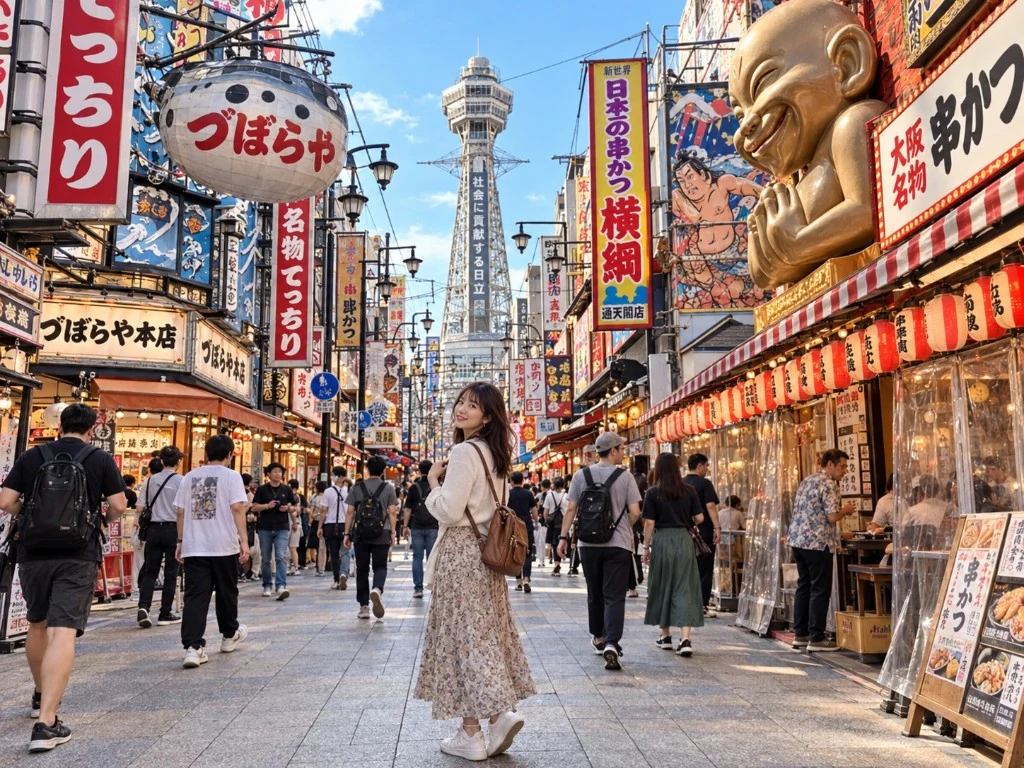
Day 2: Osaka Castle, Tsutenkaku, Shinsekai, Umeda night view
Day 2 can be the city sights. Go to Osaka Castle in the morning, eat near Tenmabashi, Honmachi, or Namba at lunch, then Tsutenkaku and Shinsekai in the afternoon, and the Umeda night view or department stores in the evening.
If you bought the Osaka Amazing Pass, put several partner sights on this day so the pass gets more use.
Day 3: Kuromon Market, Nipponbashi, souvenirs, departure
Day 3 is usually shorter. Stay near the hotel or on a route that makes the airport easy. Kuromon Market, Nipponbashi, and the Namba area work for souvenirs, then head to Kansai Airport.
An afternoon or evening flight can still fit a simple lunch and a last round of shopping. An early flight should not have much planned, or you may miss the plane.
Osaka 3 days, 2 nights FAQ
How much does a 3-day, 2-night Osaka trip cost?
One person needs about NT$18,000–35,000 for three days and two nights in Osaka. A budget version is about NT$18,000–23,000, a standard independent trip about NT$23,000–30,000. Universal Studios Japan, a higher-end hotel, or heavy shopping can push it past NT$35,000.
How much is a 3-day, 2-night Osaka trip without the flight?
Without the flight and shopping, basic costs for three days and two nights in Osaka are about NT$10,000–18,000, mainly the hotel, transport, meals, and attraction tickets.
How much yen should I bring for 3 days and 2 nights in Osaka?
If the flight, hotel, and tickets are already paid, one person should bring about 30,000–50,000 yen in cash. If you shop, eat yakiniku, or use more cash-only shops, 50,000–80,000 yen or more is safer.
Can I bring only a credit card for 3 days and 2 nights in Osaka?
Going with no cash is not a good idea. Most department stores, drugstores, and chain restaurants in Osaka take cards, but small shops, capsule-toy machines, lockers, markets, and some restaurants may still need cash.
Do I need an Osaka Amazing Pass for 3 days and 2 nights?
If one day includes several Osaka Amazing Pass partner sights and several Osaka Metro rides, it is worth considering. If the trip is mostly shopping, food, and a few sights, ICOCA is more flexible.
Is Universal Studios Japan a good fit for 3 days and 2 nights in Osaka?
Yes, but Universal Studios Japan usually takes a full day and adds the ticket, express pass, food, and shopping. With only three days and two nights, put USJ on day 2 and leave day 1 and day 3 for the city.
Where is the most convenient place to stay for 3 days and 2 nights in Osaka?
On a first independent trip, Namba, Shinsaibashi, or Umeda is the practical choice. Namba and Shinsaibashi suit shopping and food. Umeda suits transfers toward Kyoto, Kobe, or Shin-Osaka.
Can I add Kyoto or Nara to a 3-day, 2-night Osaka trip?
Yes, but three days and two nights is short, so pick either Kyoto or Nara. On a first visit to Osaka, stay in the city so the days do not get too tight.
A 3-day, 2-night independent trip to Osaka does not have to cost a lot. Confirm the flight, the hotel, transport, and whether Universal Studios Japan is on the plan first.
On a first visit to Osaka, about NT$23,000–30,000 per person leaves more room. That covers an easy area to get around, normal meals, city sights, and some shopping.
To do Osaka on a tighter budget, hold the total around NT$18,000–23,000. That means avoiding peak season, choosing a low-cost flight and a budget hotel, and controlling meals and shopping.
If you want Universal Studios Japan, a better hotel, yakiniku and an izakaya, or a lot of shopping, plan at least NT$35,000 or more so the trip is less squeezed.
Before you leave, split “basic travel costs” from “shopping.” Flights, the hotel, transport, meals, and sights are necessary. Drugstore items, souvenirs, clothes, and gifts are flexible. Once those are separate, three days and two nights in Osaka stay easier, and you are less likely to find out after you get home that you spent more than you planned.